
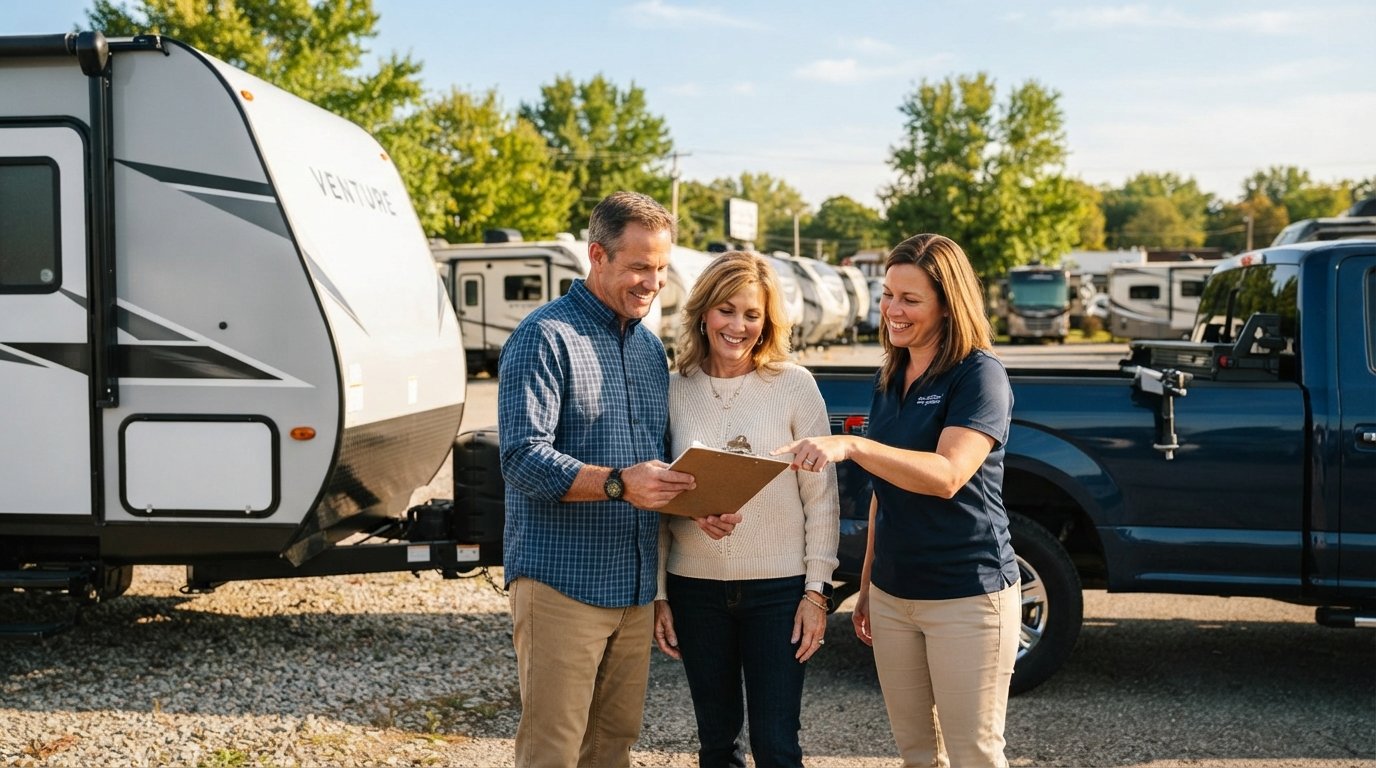
How to Finance a Travel Trailer with Bad Credit
Bad credit does not have to stop your travel trailer plans. Learn how to finance a travel trailer with bad credit and get approved with a larger down payment.

By Andrew Collins
You have found the perfect travel trailer: the floor plan fits your family, the weight matches your tow vehicle, and the price tag is within reach. Then the financing conversation starts, and the lender pulls your credit report. A low score does not automatically end the dream of weekend campgrounds and cross-country road trips. In fact, the recreational vehicle financing market has become far more accommodating for borrowers with damaged credit, provided you know which doors to knock on and how to present your situation. Understanding how to finance a travel trailer with bad credit starts with recognizing that lenders are not just looking at a three-digit number. They are weighing your income stability, your down payment, the age and type of the trailer, and the story behind your credit history. This guide walks you through the practical steps, from cleaning up your credit profile to comparing loan offers, so you can move from browsing listings to towing your new trailer home.
Why Bad Credit Does Not Automatically Disqualify You
Travel trailer financing is secured debt, meaning the trailer itself serves as collateral for the loan. This structure gives lenders a layer of protection that unsecured personal loans do not offer. Because they can repossess and resell the trailer if you default, many lenders are willing to approve borrowers with credit scores in the 500s or even lower. The key is finding lenders that specialize in subprime recreational vehicle loans rather than applying at a traditional bank that treats a 580 score as an automatic rejection.
That said, bad credit does change the terms you will be offered. You should expect a higher interest rate, a larger down payment requirement, and possibly a shorter loan term. Some lenders will also require proof of income, a co-signer, or a larger cash reserve. The goal is not to pretend your credit is perfect but to demonstrate that you are a reasonable risk despite past mistakes. Lenders want to see that the problems on your report were temporary and that your current financial situation is stable enough to handle a monthly payment.
It also helps to understand what types of lenders operate in this space. Credit unions, online financing companies, and specialized RV dealers all have different appetites for risk. A dealer that sells travel trailers every day may have relationships with lenders that approve credit-challenged buyers because the dealer knows the collateral value and can often arrange in-house financing. Your job is to explore all of these channels rather than assuming a single rejection means the end of the road.
Assess Your Credit and Fix What You Can Before You Apply
Before you submit a single application, pull your credit reports from all three major bureaus. You are entitled to free reports annually, and reviewing them serves two purposes: it helps you spot errors that could be dragging down your score, and it prepares you for the questions lenders will ask. Look for accounts that are not yours, late payments that were reported incorrectly, or balances that are higher than they should be. Disputing genuine errors can sometimes raise your score by 20 to 50 points, which can translate into a lower interest rate on a trailer loan.
If your reports are accurate but your score is low because of past late payments or collections, focus on the factors you can control right now. Pay down revolving credit card balances to below 30 percent of your limits, avoid opening new accounts in the months before you apply, and make every payment on time. Even a few months of consistent on-time payments can improve your profile in the eyes of a lender who is deciding whether to take a chance on you.
You should also gather the documentation that subprime lenders typically request. Having these items ready speeds up the process and shows lenders you are serious:
- Recent pay stubs or proof of income for the past two to three months
- Bank statements showing your cash flow and savings
- Government-issued identification and proof of residence
- Proof of insurance for the travel trailer you plan to buy
- A written explanation of any derogatory marks on your credit report
A short, honest letter explaining the circumstances behind a bankruptcy, medical collection, or period of unemployment can carry more weight than you might expect. Lenders are human, and many are willing to overlook past issues if the present looks stable and the explanation is credible.
Save for a Down Payment That Makes Lenders Comfortable
The single most effective lever you can pull when financing a travel trailer with bad credit is a larger down payment. While a borrower with excellent credit might qualify for zero down, subprime lenders often require 10 to 20 percent down, and some may ask for 30 percent on older or less expensive units. A substantial down payment reduces the lender's risk because it lowers the loan-to-value ratio and ensures you have skin in the game. If you default, the lender can sell the trailer and recover more of the balance.
Start saving as soon as you decide you want a trailer. Even an extra $1,000 or $2,000 can move you from a marginal approval to a comfortable one. You can also use a trade-in to boost your down payment. If you already own a trailer, boat, or even a paid-off vehicle, selling it privately and applying the proceeds to the new purchase strengthens your position. Some dealers will accept a trade-in directly, which simplifies the transaction and may reduce the sales tax you owe.
Do not drain your emergency savings to make a down payment, however. Lenders like to see that you have some cash reserves after the purchase, because it suggests you can handle unexpected repairs or a temporary loss of income. A down payment of 15 to 20 percent combined with a few thousand dollars left in the bank is a stronger application than a 30 percent down payment that leaves you with nothing.
Choose the Right Lender for Your Situation
Not all lenders treat bad credit the same way. Traditional banks and credit unions often have rigid score cutoffs, and if you fall below their threshold, the application is declined before a human ever looks at it. Online lenders that specialize in subprime auto and RV financing use more nuanced underwriting models. They may weigh your income, employment history, and down payment more heavily than your score, and they are accustomed to working with borrowers who have bankruptcies, repossessions, or collections in their past.
Dealer financing is another strong option, especially for travel trailers. Many RV dealers have relationships with multiple lenders and can submit your application to several at once. They also have a vested interest in getting the deal done, so they may be more willing to work with you on the down payment or find a lender whose criteria you meet. When you apply through a connection service like how to get an auto loan with bad credit, you can be matched with lenders and dealers who specifically work with credit-challenged borrowers, which saves you the time and frustration of applying one by one.
If you own a vehicle outright, you might also consider an auto title loan as a source of funds for a larger down payment, though this approach carries risk because the loan is secured by your vehicle. A safer alternative is to use a small personal loan or a credit union secured loan to cover part of the down payment, provided the combined payments remain manageable. The key is to avoid taking on so much debt that the trailer payment becomes a burden.
Compare Loan Offers Carefully and Read the Fine Print
Once you have a few offers in hand, resist the urge to accept the first one that comes with an approval. Interest rates on subprime trailer loans can vary widely, and a difference of a few percentage points can cost you thousands of dollars over the life of the loan. Request the annual percentage rate (APR), the total finance charge, and the total of all payments so you can compare offers on an apples-to-apples basis. Watch for fees that are rolled into the loan, such as extended warranties, gap insurance, and dealer preparation charges, because these increase the amount you finance and the interest you pay.
Pay attention to the loan term as well. A longer term lowers your monthly payment but increases the total interest you pay and the risk of going upside down on the trailer. Many travel trailers depreciate quickly, so a 10-year loan on a new unit may leave you owing more than the trailer is worth for several years. A shorter term of five to seven years is usually a better fit for a depreciating asset, even if the payment is slightly higher. If the monthly payment on a shorter term is out of reach, consider a less expensive trailer rather than stretching the loan term.
Ask about prepayment penalties before you sign. Some subprime lenders include clauses that charge you a fee if you pay the loan off early, which prevents you from refinancing to a lower rate once your credit improves. A loan without a prepayment penalty gives you flexibility down the road. If you cannot find a lender that offers one, factor that restriction into your decision and plan to keep the loan for its full term.
Improve Your Approval Odds with a Co-Signer or Larger Down Payment
If your credit is severely damaged, adding a co-signer with good credit can transform a likely rejection into an approval. A co-signer agrees to be responsible for the loan if you default, which reduces the lender's risk. This option works best with a family member or close friend who understands the commitment and has the financial capacity to step in if necessary. Be transparent about your payment history and your plan for making the payments on time, because a default would damage the co-signer's credit as well as your own.
If a co-signer is not available, focus on increasing your down payment or choosing a less expensive trailer. A $15,000 trailer with a 20 percent down payment is a much easier approval than a $40,000 trailer with nothing down. You can also look for trailers that are a few years old, as the loan amount will be lower and the lender's risk is reduced. Some lenders also look favorably on borrowers who have a stable employment history and have lived at the same address for several years, so highlight those strengths in your application.
Another strategy is to apply for pre-approval before you go shopping. Pre-approval gives you a clear budget and shows dealers that you are a serious buyer. It also lets you shop for financing without the pressure of sitting in a dealership office. StartAutoLoan.com offers a streamlined application that connects you with lenders and dealers who work with bad credit, so you can get pre-approved and know your options before you set foot on a lot. For a broader overview of the approval process, see our guide on how to get an auto loan with bad credit.
Prepare for the Application and Negotiation Process
When you are ready to apply, have your documents organized and your budget clear. Know the maximum monthly payment you can afford, including insurance, registration, and maintenance, and stick to it. Lenders may try to sell you a more expensive trailer or a longer loan term, but you are in control of the final decision. Be honest about your income and your credit history, because misrepresenting information on a loan application is fraud and can lead to serious consequences.
Negotiation is not just about the price of the trailer. You can also negotiate the interest rate, the down payment, and the inclusion of extras like a weight distribution hitch or a starter kit. If the dealer wants to close the sale, they may be willing to work with you on the financing terms. Do not be afraid to walk away if the offer does not fit your budget. There are other trailers and other lenders, and a pressured decision often leads to buyer's remorse.
Finally, plan for the ongoing costs of ownership. Travel trailer ownership involves insurance, registration, maintenance, storage, and campground fees. Lenders will consider your total debt-to-income ratio when evaluating your application, so make sure the trailer payment fits comfortably alongside your other obligations. A budget that leaves room for unexpected repairs and fuel costs will help you enjoy the trailer without financial stress.
Rebuild Your Credit While You Pay Off the Trailer
Financing a travel trailer with bad credit is not just a transaction; it is an opportunity to rebuild your credit profile. Every on-time payment you make on the trailer loan is reported to the credit bureaus and contributes to a stronger score over time. Set up automatic payments from your bank account so you never miss a due date, and consider paying a little extra each month to reduce the balance faster. As your credit improves, you may be able to refinance the loan at a lower interest rate, which lowers your monthly payment and saves you money over the remaining term.
Keep your credit utilization low, avoid opening new credit accounts unnecessarily, and monitor your credit reports for errors. Over a year or two of consistent payments, you may find that you qualify for prime rates on your next vehicle or trailer purchase. The habits you build while paying off this loan will serve you well for years to come.
The path to financing a travel trailer with bad credit is not always smooth, but it is well-traveled. By understanding your credit, saving for a down payment, choosing the right lender, and comparing offers carefully, you can get approved and start enjoying the open road. Take the first step today by checking your credit and exploring your financing options, and you may be surprised at how quickly your camping plans become a reality.