
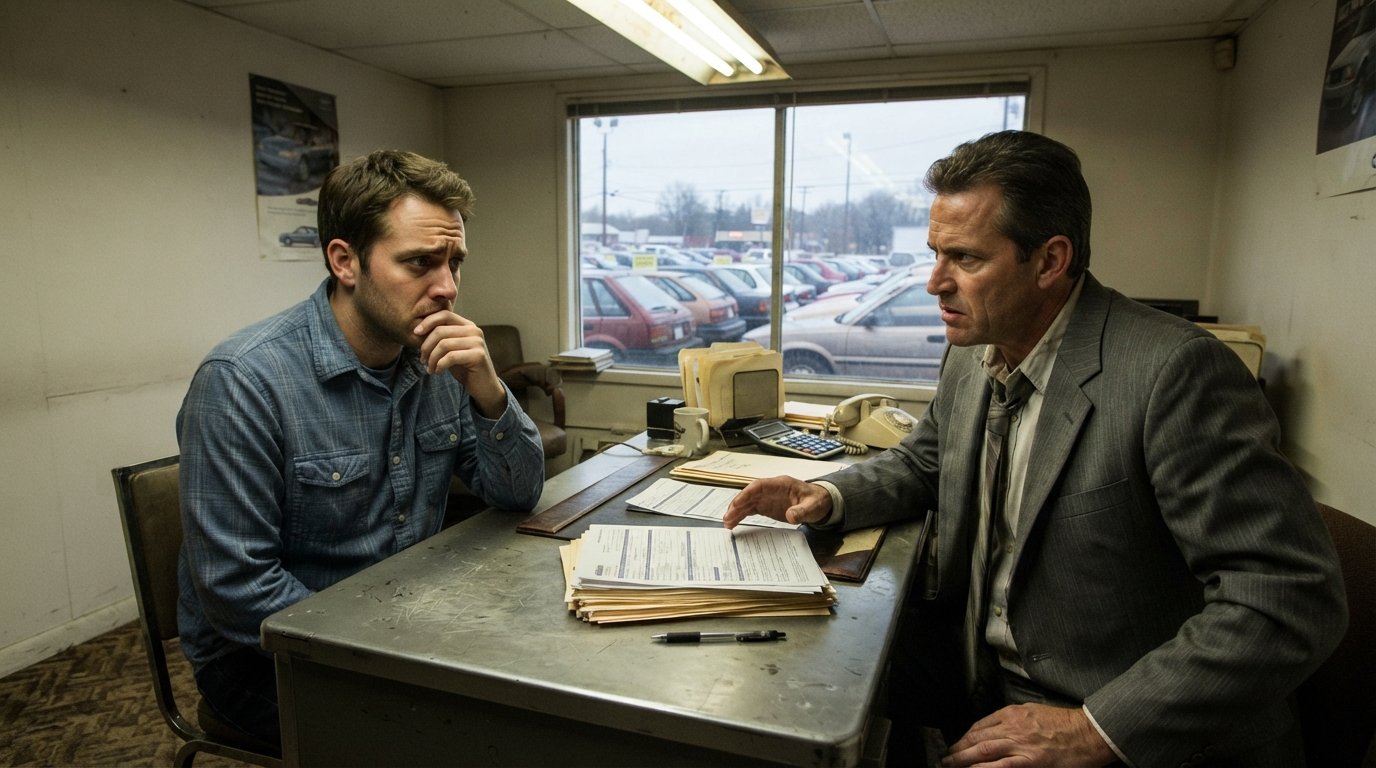
Signs of a Predatory Car Loan at a Buy Here Pay Here Lot
Spot the signs of a predatory car loan at a buy here pay here lot, from hidden fees to GPS kill switches, and learn how comparing offers protects your budget.

You have probably seen the ads: no credit check, guaranteed approval, drive today. For buyers with bad credit or no credit history, a buy here pay here lot can feel like the only door that opens. But that door sometimes leads to a loan that is designed to fail, not to help you succeed. Knowing the signs of a predatory car loan at a buy here pay here lot before you sign anything can save you thousands of dollars and years of financial stress. This guide walks you through the red flags that matter most, from GPS kill switches and mandatory add-ons to interest rates that quietly exceed state caps, and it shows you how to compare offers so you are not trapped with a single dealer's terms.
What Makes a Buy Here Pay Here Loan Different
Buy here pay here (BHPH) dealerships act as both the seller and the lender. You do not walk into a bank or credit union for financing; the dealer writes the loan in house and collects your payments each week or month. That structure is convenient for people who have been turned down elsewhere, but it also removes the competitive pressure that normally keeps loan terms in check. When one dealer controls the car, the financing, and the collection process, there is no second bidder pushing rates down or fees out of the deal.
Most BHPH loans are short term and carry high annual percentage rates. The dealer often prices the car above market value to build in room for a repossession or two, and the loan agreement may include mandatory add-ons that inflate the total cost. None of this is automatically illegal, but it creates a wide gray area where predatory practices can hide. Your job as a buyer is to separate a fair subprime loan from one that is stacked against you.
One of the first things to understand is that BHPH dealers usually do not report your on time payments to the major credit bureaus. You might make every payment for two years and still have no positive credit history to show for it. That lack of reporting is a structural disadvantage, and it is one reason consumer advocates urge buyers to explore every alternative before settling for an in house loan. If you are weighing whether a longer term is ever worth it, our guide on 5 year car loan pros and cons explains how term length changes your total cost and your risk.
Interest Rate Patterns That Exceed State Caps
Every state sets a maximum interest rate for auto loans, but BHPH dealers sometimes structure their deals to push past that ceiling. They might call part of the charge a "service fee," a "documentation fee," or a "payment processing fee" so that the finance charge looks lower on paper than it really is. When you add those fees back into the cost of borrowing, the effective annual percentage rate can be far above what the law allows. A predatory loan often depends on the buyer not doing that math.
Here is a simple way to check. Ask the dealer for the total finance charge, the total of payments, and the annual percentage rate disclosed on the truth in lending statement. Then compare that APR to your state's legal maximum for the loan amount and term. If the number is close to the cap or above it, ask questions and get the answer in writing. A legitimate dealer will not hesitate to explain the figures; a predatory one will pressure you to focus on the weekly payment instead of the total cost.
Watch for rates that are quoted as a flat fee rather than a percentage. "Pay $80 a week for 104 weeks" sounds manageable, but it may work out to an APR well into triple digits once you account for the inflated price of the car. The federal Truth in Lending Act requires the APR to be disclosed, so use it as your measuring stick. If the dealer will not put the APR in writing, that is one of the clearest warning signs you will encounter.
Payment to Income Ratios That Set You Up to Fail
A predatory lender does not need you to succeed; it needs you to miss a payment so it can repossess the car and resell it. That is why payment to income ratio is such an important red flag. If your total monthly car payment, including insurance, consumes more than about 15 percent of your take home pay, you are in risky territory. Many BHPH deals push buyers well past that line, sometimes to 25 percent or more, because the dealer is focused on the size of the down payment rather than on whether you can sustain the payment for the full term.
Before you visit a lot, calculate your monthly income after taxes and subtract fixed costs like rent, utilities, food, and any existing debt payments. The amount left is what you can realistically put toward a car. If a dealer's offer requires you to stretch that number, walk away. A loan that fits your budget is the only kind worth signing, and a dealer who pressures you to ignore your own math is showing you exactly how they will treat you when a payment is late.
Be especially cautious of deals that require a large down payment and then leave you with a short repayment window. A $2,000 down payment on a $9,000 car with a 12 month term may produce a weekly payment you cannot maintain, and the dealer keeps the down payment when the car is repossessed. That pattern is common enough that consumer protection agencies list it among the classic signs of a predatory car loan at a buy here pay here lot. Your down payment should reduce your risk, not become the dealer's safety net.
GPS Kill Switches, Excessive Fees, and Mandatory Add-Ons
Many BHPH dealers install GPS tracking devices or starter interrupt devices in the cars they finance. These devices let the dealer locate the vehicle and, in some cases, disable it remotely if you miss a payment. Some states regulate their use, and some require the dealer to disclose them clearly in the contract. The device itself is not automatically predatory, but the way it is used can be. If the dealer can shut off your car without notice, or if the contract gives them broad discretion to do so, you are taking on a risk that goes beyond a normal auto loan.
Fees are another place where predatory terms hide. Look for charges that appear without explanation, such as:
- Mandatory extended warranties or service contracts that you did not ask for and cannot decline.
- GAP insurance or credit insurance rolled into the loan without a clear, separate price.
- Documentation, preparation, or "dealer services" fees that are far above the state average.
- Late payment penalties that trigger immediately and compound quickly.
- Payment processing fees for paying in person or by phone, which push you toward a payment method that benefits the dealer.
These add-ons can increase the amount you finance by hundreds or thousands of dollars, and they are often non refundable if you pay off the loan early. A fair dealer will itemize every charge and let you decline optional products. A predatory dealer will present the add-ons as required and rush you through the paperwork so you do not notice them. Ask for a copy of the contract to take home overnight, and read every line before you sign.
Why In House Loans Lack Competitive Pressure
When a dealer arranges financing in house, there is no outside lender reviewing the deal and no competing offer to compare it against. The dealer sets the price of the car, the interest rate, the fees, and the payment schedule, and you either accept the package or leave without a car. That lack of competition is the engine behind many predatory terms. A bank or credit union has to compete for your business; a BHPH dealer only has to compete with your other options, and if you believe you have none, the dealer can charge accordingly.
This is where a multi lender connection service changes the picture. Instead of accepting the first in house offer you see, you can submit one request and receive financing options from multiple participating lenders and dealers. StartAutoLoan.com is an independent connection service, not a direct lender, and it matches buyers with bad credit, no credit, or past bankruptcies to a network of partners who may be willing to finance them. The value is not a guarantee of approval; it is comparison leverage. When you have more than one offer in front of you, you can see which one has the lower APR, the fewer fees, and the payment that actually fits your budget.
Comparison also protects you from the pressure tactics that BHPH lots rely on. A dealer who knows you have another offer is less likely to insist on mandatory add-ons or a payment you cannot afford. You can walk away from a bad deal without feeling like you have no alternative, and that alone is a powerful defense against predatory terms. You can compare auto loan options through AutoTitleLoan as another way to see what multiple lenders might offer before you commit to a single dealer's contract.
Contract Terms That Shift Risk to You
The loan contract is where predatory terms become legally binding, so it deserves your full attention. Look for clauses that give the dealer broad rights to repossess the car, charge fees, or change the terms. Some contracts include acceleration clauses that make the entire balance due if you miss a single payment, and others allow the dealer to repossess without a grace period. A fair contract will spell out your rights and the dealer's obligations in plain language.
Check whether the contract includes a right to cure, which gives you a set amount of time to catch up on missed payments before the dealer can repossess. Check whether the dealer is required to send you a written notice before repossession and whether you have the right to redeem the car by paying the overdue amount plus fees. If those protections are missing or weakened, the deal is tilted against you. Also confirm that the dealer will provide a clear payoff amount if you want to pay off the loan early, and that there is no prepayment penalty.
Finally, verify that the vehicle identification number on the contract matches the car you are buying, and that the odometer reading is accurate. Some predatory dealers sell cars with rolled back odometers or salvage titles that were not disclosed. A quick vehicle history report and a pre purchase inspection by an independent mechanic can catch problems that the dealer would rather you not see. If the dealer resists an inspection, treat that as a serious red flag.
How to Protect Yourself Before You Sign
The best defense against a predatory car loan is preparation. Before you visit any lot, know your budget, check your credit reports for errors, and gather the documents you will need for a loan application. Then follow a simple process that keeps the dealer from controlling the pace of the deal.
- Get preapproved or prequalified with at least one outside lender so you have a benchmark for rate and payment.
- Ask for the out the door price of the car in writing, separate from the financing terms.
- Request the truth in lending disclosure and review the APR, finance charge, and total of payments.
- Decline optional add-ons unless you have compared their cost and decided they are worth it.
- Take the contract home and read it before you sign, and do not let anyone rush you.
If a dealer refuses any of these steps, that refusal is your answer. A legitimate business will let you review the paperwork and compare offers. A predatory one will push you to sign on the spot, because the deal depends on you not having time to think. You are allowed to walk away at any point, and you are allowed to bring someone with you who can help you read the contract.
Remember that a car loan is a financial commitment that will follow you for years. The signs of a predatory car loan at a buy here pay here lot are not always obvious, but they follow patterns: rates that exceed state caps, payments that consume too much of your income, mandatory add-ons, GPS kill switches used as leverage, and contracts that strip away your protections. When you see those patterns, slow down and look for a better option. Exploring a multi lender connection service and comparing offers is a practical way to put competitive pressure on the deal and protect yourself from terms that are designed to fail.