Smart Budgeting for Total Car Ownership Costs
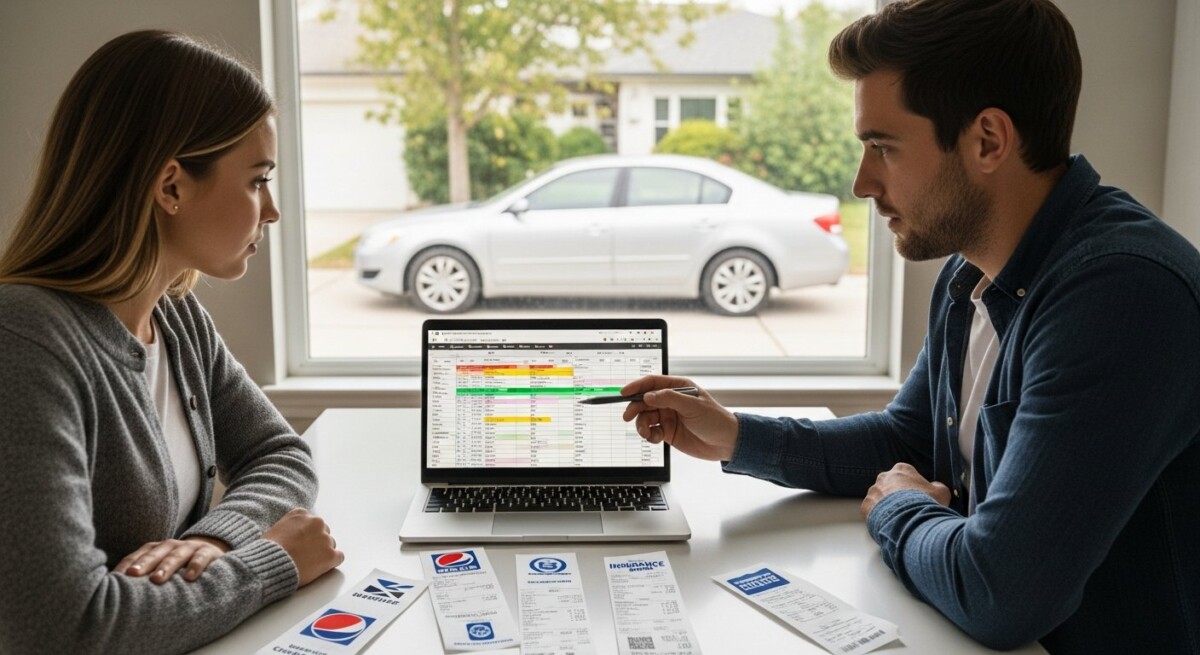
When most people shop for a car, they focus almost entirely on the monthly payment. They walk into a dealership with a number in mind, often around $400 or $500 per month, and they let that single figure drive every decision. This approach is dangerous because it ignores the vast majority of what it actually costs to own and operate a vehicle. The truth is that your car payment is just one piece of a much larger financial puzzle. If you want to avoid surprise bills, financial stress, and the risk of repossession, you need to adopt a comprehensive approach to budgeting for total car ownership. This means accounting for everything from fuel and insurance to maintenance, repairs, registration, and depreciation. By the end of this guide, you will have a clear framework for calculating your true monthly car cost, and you will know exactly how to fit that number into your overall budget.
The Hidden Costs That Sink Most Car Budgets
The single biggest mistake car buyers make is underestimating or outright ignoring the expenses that come after the purchase. A $30,000 car might have a monthly payment of $500, but the true cost of ownership could easily exceed $700 or $800 per month when you factor in everything else. These hidden costs are often what push a seemingly affordable car into the realm of financial burden. Understanding them is the first step toward realistic budgeting for total car ownership.
Consider the case of a first-time buyer who finances a used sedan. They calculate the loan payment at $350 per month and decide they can afford it. But they forget to budget for insurance, which might cost $150 per month for a new driver with limited credit history. They also overlook routine maintenance like oil changes, tire rotations, and brake pads, which can average $100 to $150 per month when spread across the year. Add in fuel costs of $120 per month, registration fees of $20 per month, and a small reserve for unexpected repairs, and the true monthly cost balloons to nearly $800. That is more than double the original estimate. This gap is why so many people find themselves struggling to keep up with their car expenses within the first year of ownership.
The Major Categories of Car Ownership Costs
To create an accurate budget, you need to break down car ownership into five core categories. Each category has its own variables, and ignoring even one can throw off your entire financial plan.
- Financing Costs: This includes your monthly loan payment, the interest you pay over the life of the loan, and any fees associated with the loan origination or prepayment penalties. This is the most visible cost, but it is not the largest for many owners over time.
- Insurance Premiums: Auto insurance is mandatory in nearly every state, and rates vary dramatically based on your age, driving history, credit score, location, and the vehicle you choose. A sports car or a luxury sedan will cost far more to insure than a practical compact car.
- Fuel and Energy: Gasoline, diesel, or electricity costs depend on how many miles you drive, your vehicle’s fuel efficiency, and local energy prices. This is a recurring variable cost that can change month to month.
- Maintenance and Repairs: Routine maintenance includes oil changes, tire replacements, brake service, and fluid flushes. Unexpected repairs can include anything from a dead battery to a failed transmission. A good rule of thumb is to set aside 10 to 15 percent of your monthly payment for these costs.
- Depreciation and Registration: Depreciation is the loss of value your car experiences over time. While it is not a direct cash outflow, it affects your equity and your ability to sell or trade the vehicle later. Registration fees, taxes, and annual inspections are direct cash costs that must be factored in.
When you add up these five categories, you get a much clearer picture of what a car truly costs. For many people, the financing cost represents only 40 to 50 percent of the total monthly expense. The rest is spread across insurance, fuel, maintenance, and depreciation. Ignoring these categories is a recipe for financial strain.
How to Calculate Your True Monthly Car Cost
Now that you understand the categories, it is time to build a simple calculation you can use before you ever step foot in a dealership. This calculation will give you a realistic monthly number that you can compare against your income and other expenses. The goal is to ensure that your total car ownership cost does not exceed 15 to 20 percent of your monthly take-home pay. For example, if you bring home $4,000 per month after taxes, your total car cost should ideally stay between $600 and $800 per month. This includes your loan payment, insurance, fuel, maintenance reserves, and registration fees.
To start, estimate your loan payment using an online auto loan calculator. Input the car price, your down payment, the interest rate you qualify for, and the loan term. For someone with challenged credit, rates may be higher, so be realistic. Next, get an insurance quote for the specific vehicle you are considering. Many insurers offer free online quotes in minutes. Then, estimate your monthly fuel cost by dividing your expected monthly mileage by your car’s miles per gallon and multiplying by the current local fuel price. For maintenance, use a flat reserve of $100 to $150 per month for a new car or $150 to $250 per month for a used car with higher mileage. Finally, divide your annual registration and tax costs by 12 to get a monthly figure. Add all of these numbers together, and you have your true monthly car ownership cost.
For example, let us say you are looking at a used compact car priced at $18,000. You put $2,000 down and finance $16,000 at 8 percent interest over 60 months. Your loan payment would be approximately $325 per month. Insurance for a driver with fair credit might be $130 per month. Fuel for 1,000 miles per month at 30 MPG and $3.50 per gallon would be about $117 per month. Maintenance reserves at $120 per month and registration at $15 per month bring the total to $707 per month. That is a very different number from the $325 loan payment you might have focused on initially. This is the power of budgeting for total car ownership. It protects you from overcommitting and helps you choose a vehicle that truly fits your financial life.
Strategies to Reduce Your Total Ownership Costs
Once you understand the full cost picture, you can take concrete steps to reduce each category. The most effective way to lower your total cost is to start with the vehicle itself. A cheaper car, a more fuel-efficient model, or a car with lower insurance and maintenance costs can save you hundreds of dollars per month. For example, a used Honda Civic or Toyota Corolla tends to have low insurance rates, excellent fuel economy, and a reputation for reliability that keeps repair costs down. Choosing a car with a strong resale value also reduces the impact of depreciation if you decide to sell it later.
Another powerful strategy is to improve your credit profile before you apply for a loan. Even a small improvement in your credit score can lower your interest rate significantly, saving you thousands over the life of the loan. If you have faced rejection from traditional lenders due to bad credit, no credit, or a past bankruptcy, you are not out of options. Platforms like StartAutoLoan.com specialize in connecting consumers with a network of lenders who work with challenged credit profiles. By using a connection service, you can compare offers and find a loan with terms that fit your budget. This is especially important because a high interest rate can dramatically increase your monthly financing cost, making it harder to afford the other categories of ownership.
You can also reduce insurance costs by shopping around, bundling policies, and choosing a higher deductible if you have an emergency fund to cover it. For fuel costs, consider a hybrid or electric vehicle if your driving patterns and access to charging make it practical. For maintenance, learn to perform basic tasks like oil changes and air filter replacements yourself. These small actions add up over time and make a meaningful difference in your monthly budget. For a deeper look at how financing terms affect your overall cost, read our guide on car loan price breakdown and total cost explained.
Budgeting for Total Car Ownership with Challenged Credit
If you have bad credit, no credit, or have experienced a bankruptcy, you already face higher hurdles in the auto financing process. Lenders may offer higher interest rates, require larger down payments, or impose stricter terms. This makes budgeting for total car ownership even more critical, because the margin for error is smaller. A higher monthly payment combined with unexpected repair bills can quickly lead to missed payments and further damage to your credit. The key is to be conservative in your estimates and to choose a vehicle that leaves room in your budget for life’s other expenses.
Start by getting pre-qualified through a connection service like StartAutoLoan.com. This gives you a realistic picture of the interest rate and loan amount you can expect without a hard inquiry on your credit. Then, use that information to run the full cost calculation described earlier. Be honest about your driving habits, your insurance costs, and your ability to handle maintenance. If the total cost exceeds 20 percent of your take-home pay, consider a less expensive car, a larger down payment, or a longer loan term to lower the monthly payment. Just be aware that longer loan terms mean more interest paid over time, so weigh that tradeoff carefully.
Another important step is to build an emergency fund specifically for car repairs. Even a reliable used car will need repairs eventually. A $500 repair bill can be a crisis if you have no savings, but it is manageable if you have set aside a small reserve each month. Aim to save $50 to $100 per month in a separate account designated for car maintenance and repairs. Over six months, that gives you $300 to $600 to handle unexpected issues without derailing your budget. This discipline is a core part of successful budgeting for total car ownership, especially when your credit history makes it harder to absorb financial shocks.
Planning for the Long Term: Depreciation and Resale Value
Depreciation is the silent cost that most buyers ignore until they try to sell or trade their car. A new car loses 20 to 30 percent of its value in the first year alone, and roughly 60 percent over five years. For a $30,000 car, that means you lose $18,000 in value over five years, or $300 per month. While depreciation is not a cash expense like a loan payment, it matters because it affects your equity. If you need to sell the car or trade it in before the loan is paid off, you may owe more than the car is worth. This is called being upside down on your loan, and it can create serious financial problems.
To minimize the impact of depreciation, choose cars that hold their value well. Brands like Toyota, Honda, Subaru, and certain models from Ford and Chevrolet tend to have strong resale values. Also, consider buying a used car that is two to three years old. The previous owner absorbed the steepest depreciation, so you get a reliable vehicle at a lower price with slower future depreciation. This strategy directly supports budgeting for total car ownership by lowering both your loan amount and your long-term equity risk.
Finally, think about how long you plan to keep the car. If you intend to drive it for eight to ten years, depreciation becomes less important because the car will eventually be worth very little regardless of the make and model. In that case, focus more on reliability and maintenance costs. A car with a reputation for longevity, like a Honda Accord or a Toyota Camry, can serve you well for a decade with proper care. This long-term perspective helps you make a purchase that aligns with your financial goals and your lifestyle.
When you are ready to move, whether for a job, family, or a fresh start, a car can be a critical tool for your transition. Reliable transportation makes it easier to explore new neighborhoods, commute to work, and manage the logistics of a move. For those planning a relocation, resources like moving.homes can help you find housing and coordinate the details of your move, so you can focus on settling into your new community with confidence.
Putting It All Together: Your Budgeting Roadmap
Budgeting for total car ownership does not have to be complicated, but it does require discipline and honesty. Start by calculating your take-home pay and your current monthly expenses. Determine how much room you have for a car without squeezing your other priorities like rent, food, savings, and debt payments. Then, use the five-category framework to estimate the total monthly cost of any car you consider. Compare that number to your available budget, and choose a vehicle that leaves you with a comfortable margin for the unexpected.
If you are struggling to get approved for a loan due to credit challenges, remember that you have options. Connection services like StartAutoLoan.com can help you find lenders who understand your situation and offer terms that work for your budget. The key is to approach the process with a complete picture of the costs involved. When you budget for the full cost of ownership, you protect yourself from financial stress, build stronger credit over time, and enjoy the freedom and independence that comes with reliable transportation.
By taking these steps, you move from being a reactive car buyer to a proactive financial planner. You stop guessing and start knowing. That knowledge is the foundation of smart car ownership, and it is the single best tool you have for making a purchase that supports your life, not one that complicates it.