
Car Loan APR Explained Before Applying for Financing
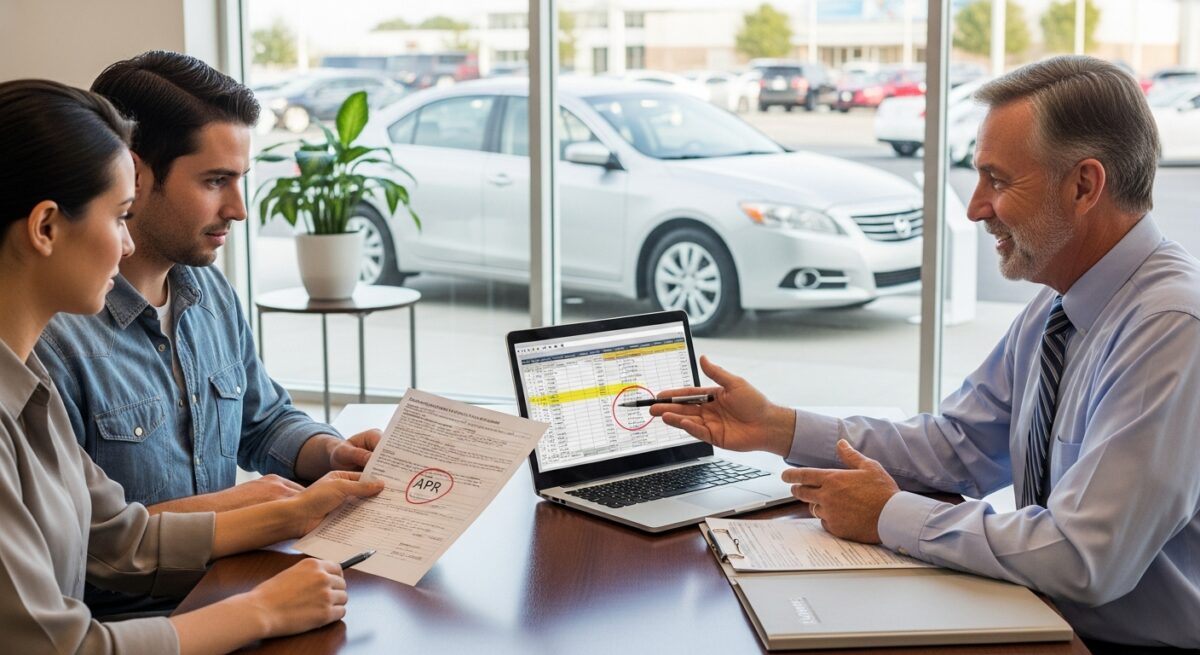
When you start shopping for a vehicle, the monthly payment often gets the most attention. Yet the number that determines whether that payment is manageable or crushing is the APR. Many buyers focus on the car’s sticker price and overlook the cost of borrowing itself. Understanding what APR means, how it is calculated, and what influences your rate can save you thousands of dollars over the life of a loan. Before you sign any paperwork, you need a clear picture of how car loan APR works and how it affects your total cost.
APR stands for annual percentage rate. It represents the total yearly cost of borrowing money, including the interest rate plus any fees that the lender charges. Unlike a simple interest rate, APR gives you a more complete view of what you will actually pay. For example, a loan with a 6% interest rate and a $500 origination fee will have a higher APR than a loan with the same interest rate and no fees. Comparing APRs between lenders is the most reliable way to evaluate the true cost of a loan. This is especially important for borrowers with less-than-perfect credit, where fees can vary significantly.
Many first-time buyers and those with past credit challenges assume they have no control over their APR. That is not true. Your credit score, loan term, down payment, and even the lender you choose all play a role. By understanding these factors, you can position yourself for a lower rate. This article breaks down everything you need to know about car loan APR before you apply, so you walk into the dealership or lending office with confidence.
What Is Car Loan APR and Why Does It Matter?
APR is the true cost of financing expressed as a yearly percentage. It includes the interest rate plus any lender fees, such as origination fees, processing fees, or documentation fees. For instance, if you borrow $20,000 at an APR of 7%, you will pay roughly $1,400 in finance charges over the first year, though the actual amount depends on the loan term and amortization schedule.
Why does this matter? Because two loans with the same interest rate can have very different APRs. A lender might advertise a low rate but tack on hidden fees that inflate the APR. When you compare car apr rates from multiple sources, always look at the APR, not just the monthly payment. A lower monthly payment might come with a longer term and higher APR, costing you more in the long run.
For borrowers with bad credit or no credit, APRs tend to be higher. Lenders view these borrowers as higher risk, so they charge more to compensate. However, not all lenders define risk the same way. Some specialize in working with challenging credit profiles and may offer more competitive rates than a traditional bank. This is where understanding current apr for car loan trends becomes valuable. Rates fluctuate based on the economy, the Federal Reserve’s actions, and lender competition. Checking rates regularly helps you time your application for the best possible offer.
Factors That Determine Your Car APR
Several key variables influence the APR you are offered. Knowing them allows you to take steps to improve your rate before you apply.
Credit Score and Credit History
Your credit score is the single most important factor. Lenders use it to gauge the likelihood that you will repay the loan on time. A higher score typically leads to a lower APR. For example, someone with a score of 750 might qualify for a 4% APR, while someone with a score of 600 might be offered 10% or higher. If your score is low, consider taking a few months to improve it before applying. Pay down credit card balances, dispute any errors on your credit report, and avoid opening new accounts right before you apply.
Loan Term Length
The length of your loan also affects your APR. Shorter terms, like 36 or 48 months, generally come with lower rates because the lender’s risk is reduced. Longer terms, such as 72 or 84 months, often carry higher APRs because the risk of default increases over time. While a longer term lowers your monthly payment, it increases the total interest paid. Aim for the shortest term you can afford to keep your APR and total cost down.
Down Payment Amount
A larger down payment reduces the amount you need to borrow, which lowers the lender’s risk. This can result in a lower APR. Putting 20% or more down signals to lenders that you are financially committed and less likely to default. For buyers with bad credit, a substantial down payment can sometimes offset credit concerns and lead to a better rate.
Vehicle Age and Type
Lenders consider the vehicle itself. New cars typically have lower APRs than used cars because they hold value better and are less likely to require major repairs. However, used cars can still be a smart choice if the APR difference is small. Some lenders offer promotional rates on new cars from certain manufacturers, but these rates often require excellent credit. If you are shopping for a used vehicle, check the current apr for car loan rates at credit unions and online lenders, as they may offer competitive terms.
How to Compare Car Loan APRs Effectively
Comparing APRs from multiple lenders is essential, but you need to do it correctly. Here is a step-by-step approach.
Step 1: Gather quotes from at least three lenders. Include banks, credit unions, online lenders, and dealership financing. Each may offer different rates based on their risk models. Step 2: Ask for the APR, not just the interest rate. Some lenders will quote a low interest rate but add fees that push the APR higher. Step 3: Compare loans with the same term length. A 60-month loan from one lender and a 72-month loan from another cannot be fairly compared on APR alone. Step 4: Look at the total cost of the loan. Multiply the monthly payment by the number of months and add any upfront fees. This gives you the true cost.
For example, imagine you receive two offers for a $25,000 car. Lender A offers a 5.5% APR with a $300 fee over 60 months. Lender B offers a 5.0% APR with no fees but requires a 48-month term. The total cost of Lender A’s loan might be lower because of the longer term, but the APR is higher. You need to decide which trade-off works for your budget. Use an online APR calculator to run the numbers before you commit.
Common Mistakes That Increase Your APR
Even savvy buyers can make errors that raise their car apr. Avoid these pitfalls.
- Applying for too many loans in a short period. Each application triggers a hard credit inquiry, which can lower your score. However, rate shopping within a 14- to 45-day window is typically counted as a single inquiry by credit scoring models. Plan your applications accordingly.
- Focusing only on the monthly payment. A dealer might stretch your loan to 84 months to make the payment look affordable, but the APR and total interest will be much higher. Always calculate the total cost.
- Negotiating price before discussing financing. The best approach is to negotiate the car price first, then discuss financing. If you combine the two, the dealer can obscure the true APR by adjusting the price.
- Ignoring your credit report before applying. Errors on your credit report can cost you a higher APR. Check your report at AnnualCreditReport.com at least 60 days before you apply. Dispute any inaccuracies promptly.
Each of these mistakes is avoidable with a little preparation. Taking the time to review your credit, shop around, and understand the loan terms will put you in a stronger position.
How to Get the Best Car APR With Bad Credit
If your credit score is below 600, you may feel discouraged about your chances. However, many lenders specialize in bad credit auto loans. StartAutoLoan.com, for example, connects borrowers with a network of lenders who work with individuals facing credit challenges. The key is to approach the process strategically.
First, gather your financial documents: proof of income, proof of residence, and a list of references. Lenders will want to see that you have steady income and can afford the payment. Second, consider a co-signer with good credit. A co-signer can help you qualify for a lower APR because the lender can rely on their credit history. Third, save for a larger down payment. Even an extra $1,000 can make a difference in the rate you are offered.
It is also wise to get preapproved before visiting a dealership. Preapproval gives you a clear picture of your budget and APR before you start negotiating. It also prevents dealers from marking up your rate for extra profit. When you have a preapproval letter in hand, you can compare the dealer’s offer against what you already qualified for. In our guide on Auto Loan APR Explained: What It Means and How to Lower It, we explain additional strategies for reducing your rate even with less-than-perfect credit.
The Role of Lender Type in Your APR
Not all lenders operate the same way. Banks, credit unions, online lenders, and dealerships each have different risk appetites and fee structures. Credit unions are known for offering lower APRs to members, often because they are not-for-profit institutions. If you belong to a credit union, check their rates first. Online lenders and connection services like StartAutoLoan.com provide access to a wide network of lenders, which can be especially helpful if you have been turned down elsewhere.
Dealership financing can be convenient, but it often comes with higher APRs unless you qualify for a manufacturer’s promotional rate. These promotional rates are typically reserved for buyers with excellent credit. If you have bad credit, the dealership may mark up the rate from the lender they work with, adding extra profit for themselves. This is why getting preapproved from an outside source is so important.
One more option worth exploring is car loan refinancing. If you already have a car loan with a high APR, refinancing could lower your rate and save you money each month. This is especially useful if your credit has improved since you originally financed the vehicle.
Frequently Asked Questions About Car Loan APR
What is the difference between APR and interest rate?
The interest rate is the cost of borrowing the principal amount, expressed as a percentage. APR includes the interest rate plus any fees charged by the lender. APR gives a more complete picture of the total cost of the loan.
Can I negotiate the APR on a car loan?
Yes. APR is not set in stone. You can negotiate with the lender, especially if you have strong credit or a large down payment. Dealers may also be willing to lower the APR to close the sale, particularly on new cars where manufacturer incentives are available.
How does the loan term affect my APR?
Shorter loan terms generally have lower APRs because the lender’s risk is lower. Longer terms often carry higher APRs and result in more total interest paid over the life of the loan.
What is a good APR for a car loan right now?
Current car apr rates vary widely based on credit score, loan term, and vehicle type. As of early 2026, borrowers with excellent credit might see rates around 5-7%, while those with poor credit could face rates of 12-20% or higher. Checking rates from multiple lenders will give you a realistic range for your situation.
Does applying for multiple loans hurt my credit?
Each application causes a hard inquiry, which can temporarily lower your score by a few points. However, credit scoring models treat multiple inquiries for the same type of loan within a 14- to 45-day window as a single inquiry. Rate shopping within that period is safe.
Understanding car loan APR before you apply puts you in control of the financing process. Instead of accepting the first offer, you can compare terms, negotiate from a position of knowledge, and choose a loan that fits your budget. Whether you have excellent credit or are rebuilding after financial setbacks, the same principles apply: know your credit, shop around, and focus on the APR rather than the monthly payment. With this foundation, you are ready to find a car loan that works for you.