
Smart Questions to Ask Dealers About Bad Credit Financing
Arm yourself with the key questions to ask dealers about bad credit financing and avoid hidden fees, sky-high APRs, and pressure tactics.

By Kevin Thompson
Walking onto a car lot with less-than-perfect credit can feel like navigating a maze blindfolded. You know you need a vehicle, you know your credit history is a hurdle, and you suspect the dealer holds most of the cards. But here is the truth: you have more power than you think, and it starts with asking the right questions. The difference between a fair deal and a financial trap often comes down to what you ask before you sign anything. This guide will arm you with the specific, pointed questions to ask dealers about bad credit financing so you can protect yourself, understand the real cost of the loan, and drive away with terms you can actually live with.
Why Specific Questions Matter in Bad Credit Financing
When you have bad credit, the financing offer a dealer presents is not just a number on a piece of paper. It is a complex package of interest rates, fees, add-ons, and conditions that can vary wildly from one lender to the next. Dealers often work with a network of subprime lenders, and the markup on these loans can be substantial. Asking vague questions like "What is my rate?" invites vague answers. Instead, you need to probe the details: the annual percentage rate (APR), the length of the loan, the total finance charge, and any prepayment penalties. Your goal is to transform a confusing offer into a transparent picture of what you will actually pay.
Moreover, the questions you ask signal to the dealer that you are an informed buyer, not a desperate one. This alone can change the tone of the negotiation. When you demonstrate that you understand how financing works, you are less likely to be steered toward a high-cost loan or pressured into unnecessary extras. Remember, you are not obligated to accept the first offer. You can and should ask for clarification, compare terms, and walk away if the answers do not add up. For a broader look at navigating the entire process, including how to evaluate lender options, see our guide on EV auto loans for bad credit, which shares principles that apply to any vehicle type.
Questions About Interest Rate, Fees, and Total Cost
The most critical area to scrutinize is the cost of borrowing. With bad credit, the interest rate you are offered will likely be higher than average, but that does not mean you should accept any rate without question. Start by asking for the APR, not just the monthly payment. The APR includes both the interest rate and certain fees, giving you a more accurate annual cost. Then, dig into the fees themselves. Dealers may charge documentation fees, preparation fees, and other administrative costs that can be rolled into the loan. You need to know exactly what each fee is for and whether it is negotiable.
Another essential question is about the total cost of the loan over its full term. A low monthly payment might seem attractive, but if the loan stretches over 72 or 84 months, you could end up paying thousands more in interest. Ask the dealer to show you the total amount you will pay if you make every payment on time. This figure, sometimes called the "total of payments," is the true bottom line. Also, inquire about any prepayment penalties. Some subprime loans include fees for paying off the loan early, which can trap you in a high-interest cycle. You want the flexibility to refinance or pay off the balance without extra charges.
- What is the exact APR, and how does it compare to the base rate the lender offers?
- Are there any origination, documentation, or dealer fees, and can any of them be reduced?
- What is the total amount I will pay over the life of the loan, including all interest and fees?
- Does the loan have a prepayment penalty if I pay it off early or refinance?
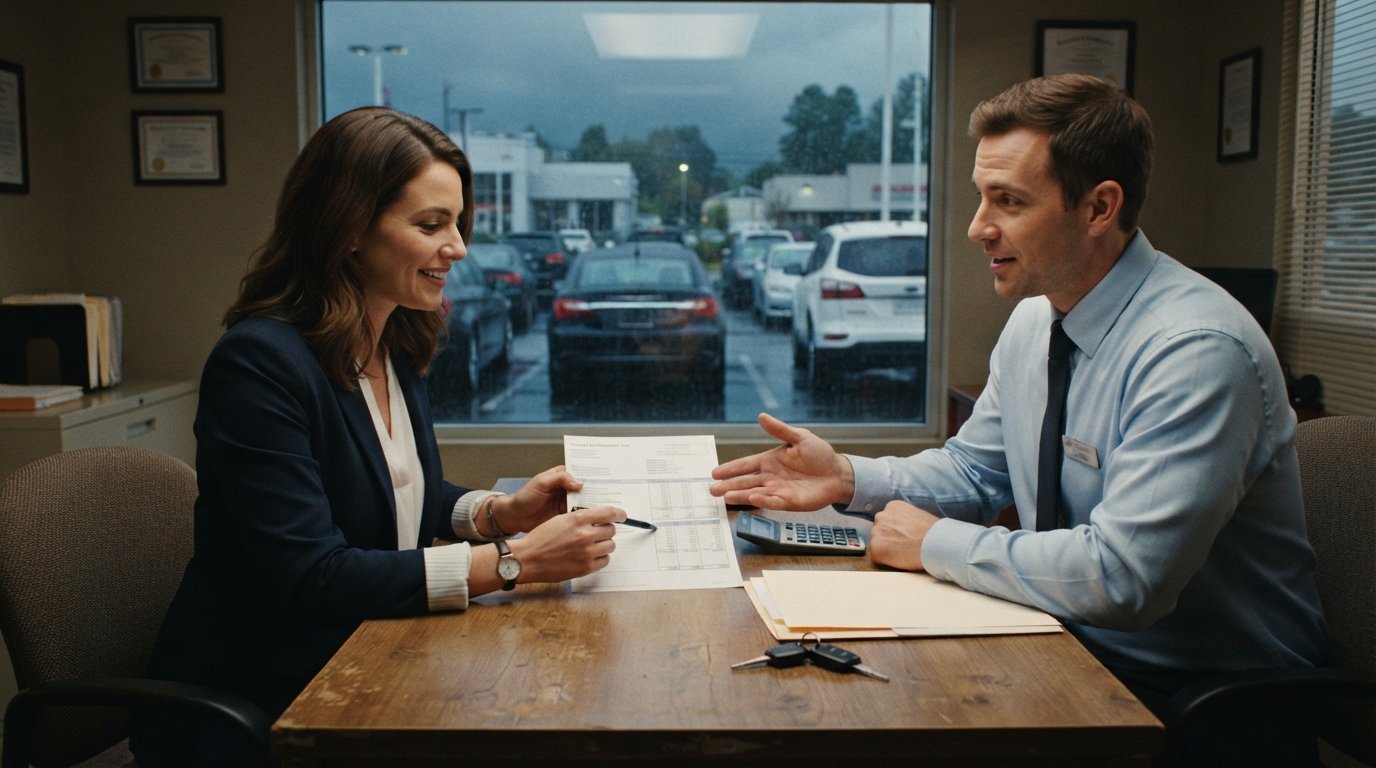
Once you have these answers, do not be afraid to ask for a printed breakdown. A reputable dealer will provide a clear, itemized summary. If they hesitate or give verbal assurances without documentation, consider that a warning sign. You can also use online tools to compare offers from multiple sources. For instance, platforms that connect you with lenders, like AutoTitleLoan, can help you gauge whether a dealer's offer is in the right ballpark. StartAutoLoan.com offers a similar connection service, matching buyers with lenders who specialize in bad credit, which can serve as a useful benchmark.
How to Ask About Down Payment Requirements
The down payment is another area where bad credit borrowers often face pressure. Dealers may require a larger down payment to offset the risk of lending to someone with a low credit score. However, the amount can vary significantly, and it is worth asking detailed questions. First, clarify whether the down payment is a fixed percentage or a flat amount. Ask if there is any flexibility, especially if you can demonstrate a stable income or a long-term employment history. Some dealers may accept a trade-in vehicle as part of the down payment, so inquire about that option as well.
It is also important to understand how the down payment affects the loan terms. A larger down payment reduces the principal amount, which can lower your monthly payment and the total interest you pay. But you should not drain your savings to meet a dealer's demand. Ask the dealer to explain how different down payment amounts would change your monthly payment and total cost. This will help you find a balance that works for your budget. Additionally, confirm whether the down payment is refundable if the financing falls through. Some dealers may require a deposit to hold the vehicle, and you need to know the conditions under which that money is returned.
- Is the down payment a percentage of the vehicle price or a fixed dollar amount?
- Can I use a trade-in vehicle to cover part or all of the down payment?
- How does increasing or decreasing the down payment change my monthly payment and total interest?
- Is the deposit refundable if I do not get approved for financing or decide not to buy?
Remember, a dealer who is unwilling to discuss down payment options transparently may not have your best interests at heart. You have the right to negotiate and to understand the math. If you are working with a connection service like StartAutoLoan.com, you can often get pre-qualified with a down payment range before you visit the dealership, giving you more leverage.
Red Flags in Dealer Responses
As you ask these questions, pay close attention to how the dealer responds. Certain answers or evasions should raise immediate red flags. One common warning sign is a dealer who focuses solely on the monthly payment and dodges questions about the APR or total cost. This tactic, known as "payment packing," is designed to make an expensive loan seem affordable by stretching it over a long term. Another red flag is a refusal to provide written details. If a dealer will not put the terms in writing or gives you a "take it or leave it" ultimatum, walk away. Legitimate dealers are accustomed to informed buyers and will gladly provide documentation.
Other red flags include pressure to sign immediately, claims that the offer is only valid today, or attempts to add unnecessary products like extended warranties or credit insurance without clear explanation. You should also be wary if the dealer cannot clearly explain who the lender is or if they seem confused about the loan terms. Trust your instincts: if something feels off, it probably is. Remember that you can always seek financing through other channels. StartAutoLoan.com, for example, connects you with a network of lenders who compete for your business, which can provide a safety net if a dealer's offer seems unfair.
- Does the dealer avoid giving a straight answer about the APR or total cost?
- Are they unwilling to provide a written breakdown of fees and terms?
- Do they use high-pressure tactics, such as claiming the offer expires today?
- Are they pushing add-ons like extended warranties or credit insurance without explaining them?
If you encounter any of these red flags, do not hesitate to pause the process. You can excuse yourself, review the numbers, and even seek a second opinion. The goal is to leave the dealership with a loan you understand and can afford, not one you regret.
Additional Questions to Strengthen Your Position
Beyond the core financial questions, there are several other inquiries that can give you a fuller picture of the deal. Ask about the lender's reputation and whether the dealer has a relationship with credit unions or other institutions that might offer better terms for bad credit borrowers. Some dealers work with credit unions that specialize in second-chance auto loans. Also, inquire about the vehicle's history and condition, especially if it is used. A reliable car reduces the risk of unexpected repairs, which can derail your budget. Finally, ask about the loan's reporting to credit bureaus. On-time payments on a subprime auto loan can help rebuild your credit, so you want to ensure the lender reports to the major bureaus.
Another smart question is about the right to cancel or return the vehicle. Some dealers offer a short return window, but it is not universal. Knowing your options can protect you if the car turns out to be a lemon. And do not forget to ask for a copy of all signed documents. You should leave the dealership with a complete set of paperwork, including the loan agreement, the buyer's order, and any addendum. This documentation is your proof of the terms and your protection in case of a dispute. If you are considering financing through an online connection service, you can also ask how their process works and what support they offer after the sale.
Final Thoughts: Empower Yourself with Information
Securing auto financing with bad credit is challenging, but it is far from impossible. The key is to approach the process with curiosity and confidence, asking the questions that matter and insisting on clear, written answers. By focusing on the APR, fees, total cost, down payment, and red flags, you can avoid common traps and find a loan that fits your budget. Remember that you are not alone: resources like StartAutoLoan.com can connect you with lenders who understand your situation and are willing to work with you. Whether you are buying a new car, a used car, or even an EV, the right questions will help you drive off the lot with a sense of control and a clear path to better credit.